Basement Renovation Cost in Toronto: A Contractor's Honest 2026 Guide
April 3, 2026
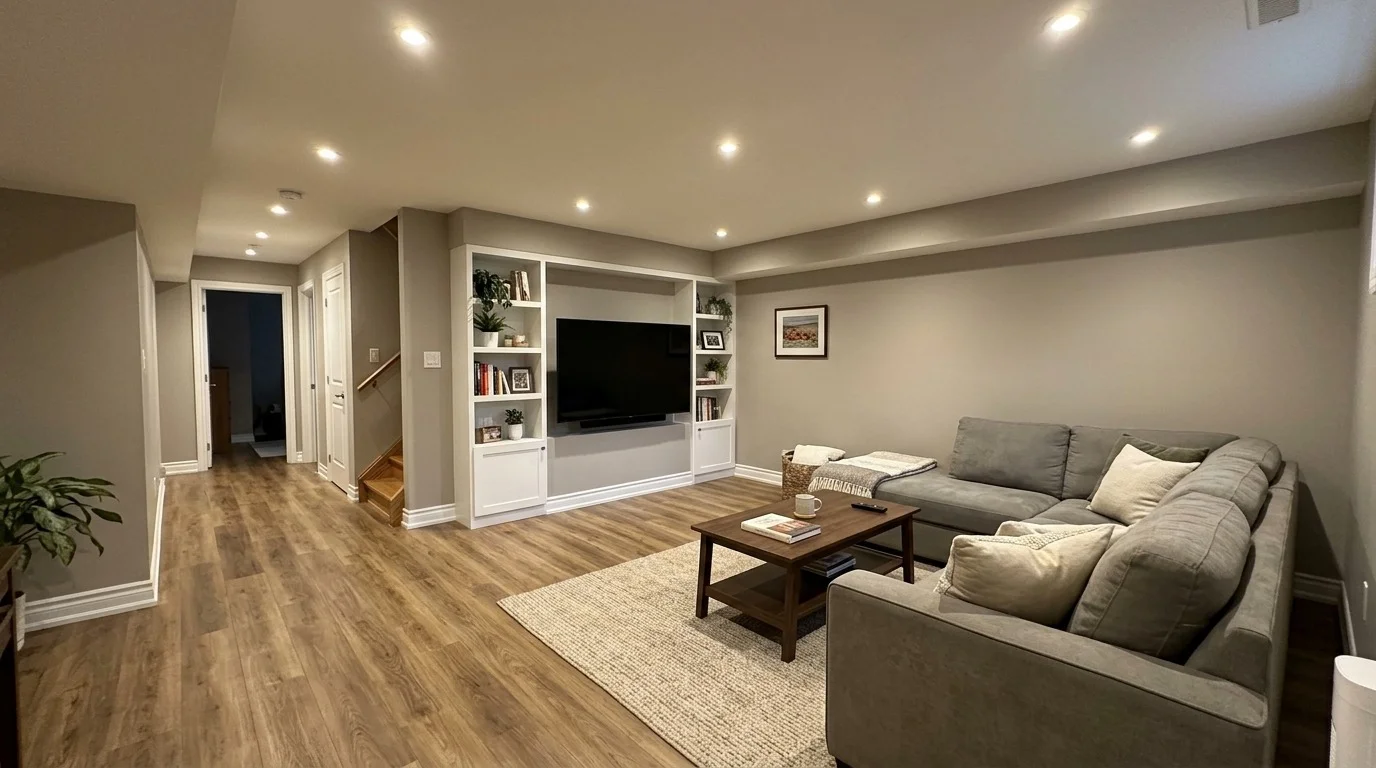
I’ve been swinging a hammer and running job sites in Toronto for over 20 years — my team’s finished more than 80 basements in the last five years alone. And I’ve seen it a hundred times: a homeowner gets a number in their head from some quick Google search — maybe $15,000 or $20,000 — and then they start getting real quotes and the excitement turns to shock. Here’s what I’d tell a homeowner before they call anyone: that number you found online is almost never the real basement renovation cost in Toronto. Not even close.
It doesn’t account for our city’s old housing stock, the constant threat of moisture, or the real price of skilled labour in the GTA. I’m not here to sell you anything. I’m here to give you the straight goods, the kind of advice I’d give a neighbour over a coffee. Because trust me on this one — the most expensive basement in Toronto is the one you have to finish twice.
Basement Renovation Cost in Toronto: The 2026 Reality
Let me break it down. When a homeowner asks me for a “ballpark,” I tell them it’s a big park. A basement can be a simple open-concept room or a full-blown legal apartment — and they’re two totally different jobs with two very different price tags. I’ve broken it down into the three main tiers I see across neighbourhoods from The Annex to Scarborough to Brampton.
By Renovation Tier
This is the best way to get a quick snapshot of where your basement renovation cost might land. It’s all about what you’re putting into the space.
| Tier | Total Cost (CAD) | Per Square Foot | What’s Included |
|---|---|---|---|
| Basic / Open Concept | $35,000–$55,000 | $30–$45 | Drywall, simple LVP flooring, pot lights. A clean, open living space — no bathroom, no complex walls. Best value if you just want usable square footage. |
| Mid-Range | $55,000–$90,000 | $45–$75 | The most common project I do. Bedroom(s), full basement bathroom, proper insulation, and extending your HVAC. Worth the upgrade for most families. |
| High-End / Legal Suite | $80,000–$150,000+ | $75–$250 | A legal rental unit or basement suite with separate entrance, full kitchen, fire separation, and its own electrical panel. It’s a gut job and a whole different level of work. |
By Basement Size
To get more specific, here’s how those costs generally play out based on the footprint of a typical Toronto home. These are real numbers I’ve quoted on jobs from Richmond Hill to Leslieville.
| Basement Size | Basic Finish | Mid-Range Finish | High-End / Legal Suite |
|---|---|---|---|
| 600 sq ft | $18,000–$27,000 | $27,000–$45,000 | $45,000–$90,000 |
| 800 sq ft | $24,000–$36,000 | $36,000–$60,000 | $60,000–$120,000 |
| 1,000 sq ft | $30,000–$45,000 | $45,000–$75,000 | $75,000–$150,000 |
| 1,200 sq ft | $36,000–$54,000 | $54,000–$90,000 | $90,000–$180,000 |
Component-by-Component: Where Your Money Goes
So what makes up that final number? It isn’t just drywall and paint. Here’s a realistic breakdown of each trade and what they cost. This is where you can see how quickly it adds up.
- Waterproofing (Interior): $3,000–$10,000
- Waterproofing (Exterior): $15,000–$35,000 (a much bigger job — full excavation)
- Underpinning: $30,000–$80,000+ (for increasing ceiling height — a massive structural project)
- Framing: $3,000–$6,000. I prefer steel studs in basements — they’re perfectly straight and mould won’t grow on them.
- Insulation (Spray Foam): $3,000–$7,000 ($3–$5/sq ft). Best bang for your buck. Don’t cheap out here.
- Drywall & Taping: $3,000–$6,000. For ceilings, you’ve got two options: a drywall ceiling (cleaner look, doesn’t steal headroom) or a drop ceiling (cheaper, lets you access plumbing and wiring later). I prefer drywall in most cases.
- Electrical: $3,000–$8,000. Covers rough-in, pot lights, outlets, and panel work. If your panel’s an old 100-amp, budget $2,500–$4,500 extra for an upgrade.
- Plumbing Rough-in: $3,000–$6,000. One of the most expensive single items, especially in older homes where we have to break up concrete. I’ve done basement bathroom rough-ins in East York that hit $6,000 before we even started the fixtures.
- Full Bathroom (3-piece): $8,000–$20,000. Shower, toilet, vanity, tile. Check out our bathroom remodel guide for a deeper dive on what drives those costs.
- Flooring (LVP): $3,000–$7,000 ($4–$8/sq ft installed). It’s waterproof — not water-resistant, actually waterproof. Perfect for basements.
- Egress Windows: $3,000–$7,000 per window. Required for any legal bedroom. Includes cutting the foundation, the window unit, and the window well.
- HVAC Extension: $2,000–$5,000 for ductwork, returns, and proper heating downstairs. A mini-split system costs more but gives you independent climate control.
- Sump Pump Installation: $1,000–$3,500. If you don’t already have one, you’ll want one.
- Permits & Fees: $500–$3,000. Building, plumbing, electrical — don’t skip this.
The Moisture Question (Before You Spend a Dime)
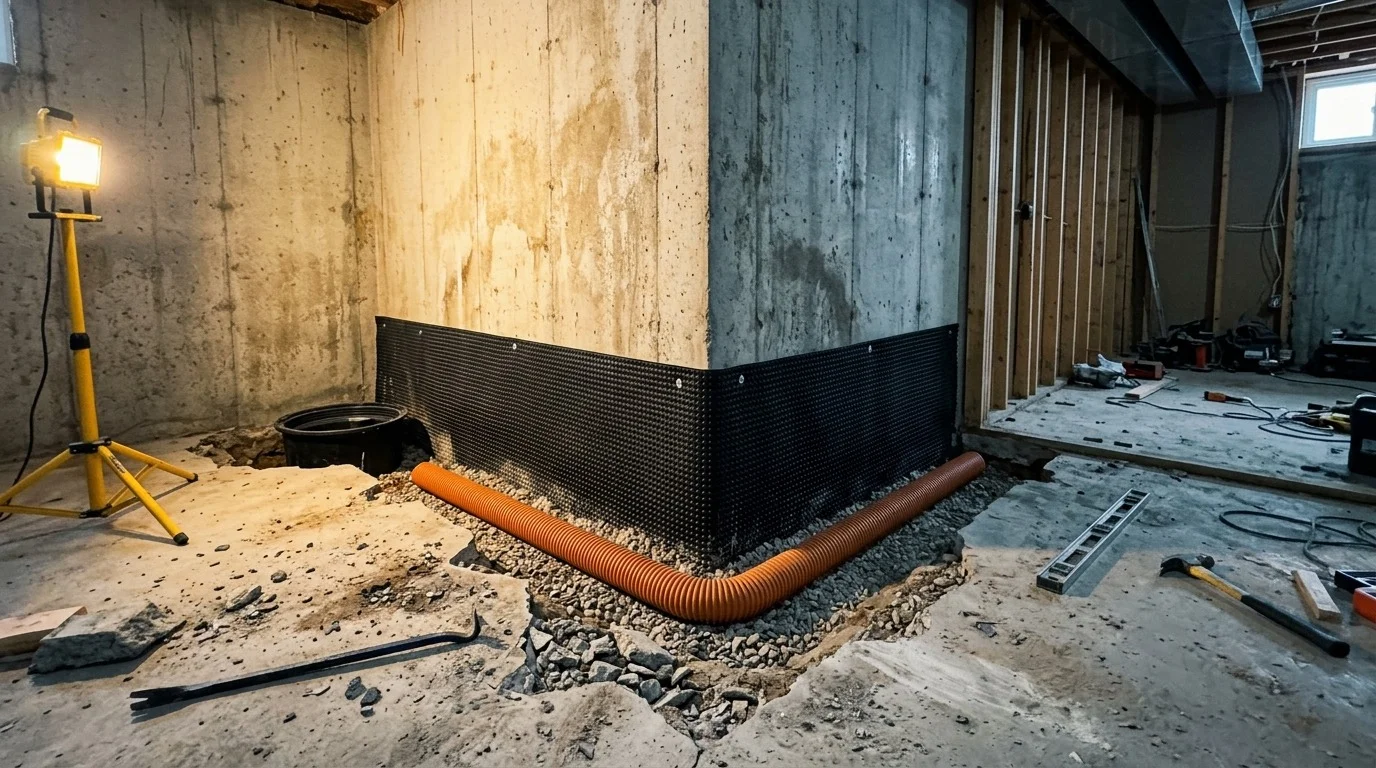
If there’s one thing I’ve learned in my 20 years of doing this, it’s that water always wins. You can build the most beautiful basement in Leslieville, but if you haven’t dealt with moisture first, you’ve just built a fancy mould factory. It’s the biggest mistake I see, and I’ve seen it a hundred times.
I once had a client in High Park who’d just bought a house with a freshly finished basement — looked great on the listing photos. Six months later, after a big spring thaw, they had water seeping in along one wall. The whole thing had to be torn out — flooring, drywall, insulation, everything. They paid to finish their basement twice. That’s a $50,000 lesson I don’t want you to learn.
Waterproofing Options and What They Cost
Dealing with water isn’t a one-size-fits-all fix. The right approach depends on where the water’s coming from and how bad it is.
- Interior Waterproofing ($3,000–$10,000): The most common approach for Toronto homes. We install a dimpled membrane on the interior foundation walls and a weeping tile system under the slab that directs water to a sump pump. It manages water that gets in. For most homes, this is all you need.
- Exterior Waterproofing ($15,000–$35,000): This is the permanent fix, but it’s a huge job. We excavate all the way down to your footings, clean and seal the wall, and install a new membrane and weeping tile. It stops water from ever touching your foundation. I usually only recommend this for serious, persistent water issues.
Interior vs Exterior Waterproofing
So which one’s right for you? In my experience, a properly installed interior system handles 90% of Toronto basements just fine. It’s less disruptive and much more affordable. We save the full exterior dig for homes with crumbling foundations or persistent water entry that an interior system can’t keep up with. The City of Toronto’s basement flooding protection subsidy can cover up to $6,650 of this work — it’s worth looking into.
Signs Your Basement Isn’t Ready to Finish
Not sure if you have a problem? Here’s what I look for on every single walkthrough:
- A damp, musty smell. That’s mould, even if you can’t see it.
- White, chalky powder on the concrete walls. That’s efflorescence — mineral salts left behind as water evaporates through the concrete. Dead giveaway.
- Dark spots or stains on the floor or walls.
- Puddles or visible water after a heavy rain. Obvious, but you’d be surprised how many people shrug this off.
Legal Suite vs. Recreational Space — Two Very Different Budgets
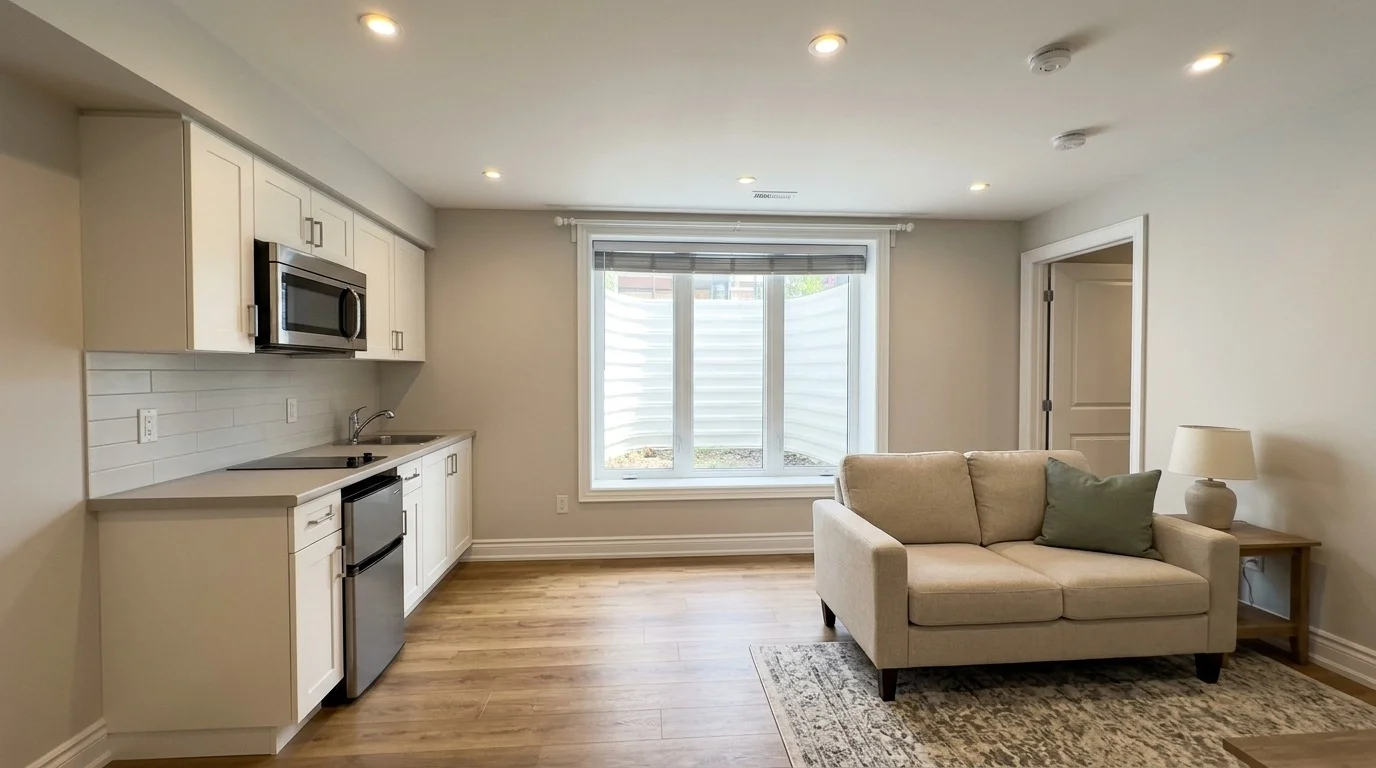
Here’s what I’d tell a homeowner right at the start: “basement renovation” can mean two very different things. Are you building a playroom for the kids, or a legal basement apartment to generate rental income? The second you decide you want a rental unit, the Ontario Building Code kicks in with a whole new set of rules, and your basement renovation cost will jump significantly.
What a Legal Secondary Suite Requires (Ontario Building Code)
Creating a legal basement suite isn’t just about adding a kitchen. Here’s the punch list of what my team has to build to code:
- Egress: Every bedroom needs an egress window big enough to escape through in a fire. The suite needs its own separate entrance — no sharing with the main house.
- Fire Separation: Special fire-rated drywall (5/8" Type X) on the ceiling and walls between units. Fire-rated doors (45-minute rated) at every transition.
- Interconnected Smoke/CO Alarms: When one goes off, they all go off — upstairs and down.
- Ceiling Height: Minimum 1.95 metres (6'5") throughout, as per the Ontario Building Code. In older Toronto homes, this sometimes means underpinning — and that’s a $30,000–$80,000+ project on its own.
- Separate HVAC & Electrical: The suite needs its own heating/cooling controls and often its own electrical panel.
The Real Cost of Going Legal ($80K–$140K+)
When you add up all the code requirements, the extra costs are substantial:
- Separate Entrance: $5,000–$15,000
- Fire Separation & Doors: $2,500–$6,500
- Full Kitchen: $8,000–$20,000+
- Separate Electrical Panel: $2,000–$4,000
- Interconnected Smoke/CO: $500–$1,000
That’s why a legal basement apartment in Toronto rarely costs less than $80,000 and can easily push past $150,000 if you need underpinning or extensive plumbing work. The upside is real rental income — and it adds serious value when you sell. But you have to go in with your eyes open on the budget.
The Timeline: What 8–14 Weeks Looks Like
“How long will this take?” That’s always the second question after “How much?” For a typical mid-range basement finishing project, budget for 8 to 14 weeks from the day we start demolition to the final punch list.
Week-by-Week Breakdown
| Weeks | Phase of Work |
|---|---|
| 1 | Demolition, concrete cutting (for plumbing), waterproofing prep |
| 2–3 | Framing, plumbing & electrical rough-ins, HVAC |
| 4 | Inspections (framing, plumbing, electrical) |
| 5–6 | Insulation & vapour barrier, drywall installation |
| 7–8 | Taping, mudding, sanding, priming |
| 9–10 | Flooring, painting, doors & trim |
| 11–12 | Bathroom fixtures, cabinetry, light fixtures |
| 13–14 | Final touches, punch list, final inspection & cleanup |
What Causes Delays
Why the big range? In an ideal world, every job would be done in 8 weeks. But this is the real world.
- Inspection Scheduling: We can’t move to the next step until the city inspector signs off. I’ve seen Toronto Building take 2 weeks to schedule a single inspection.
- Material Backorders: That specific tile or fixture you love? Might be 4 weeks out. I had a job in Vaughan delayed three weeks waiting on a custom vanity.
- Surprises Behind the Walls: Old wiring, hidden water damage, a weeping tile that’s collapsed. A “simple” 800 sq ft job in North York once turned into a 5-month project after we found two load-bearing walls that weren’t on any drawing.
- Scope Changes: If you decide to add a wet bar after we’ve already done the rough-in, that’s going to cost time and money.
Basement Renovation Ideas That Actually Add Value
Once you’ve got the bones covered — waterproofing, framing, electrical — you can start thinking about the fun stuff. A finished basement doesn’t have to be one big empty living space. Here are the most popular features I’m asked to build, and what they add to the budget.
Home Theatre ($15,000–$40,000)
More than just a big TV. A proper home theatre involves specialized wiring for surround sound, tiered flooring, soundproofing insulation, and custom lighting. It’s a luxury, but for movie and sports fans, it’s worth the upgrade. I did one last year in Markham with a 120-inch screen and in-wall speakers — the homeowner hasn’t been to a cinema since.
Home Office ($10,000–$25,000)
With so many people working from home across the GTA, this is a huge value-add. Proper electrical for all your gear, good lighting (so you don’t look like a shadow on Zoom calls), custom built-in shelving, and sometimes soundproofing for privacy. Dedicated circuits are a must.
Gym / Workout Room ($5,000–$15,000)
Can be as simple as durable rubber flooring and a mirror wall, or more complex with reinforced ceiling mounts, extra ventilation, and dedicated electrical for treadmills and equipment.
Wet Bar ($5,000–$20,000)
A classic basement feature. A basic bar is a small counter with a sink. A high-end setup includes a bar fridge, dishwasher, custom cabinetry, and stone countertops — almost a mini version of what you’d find in our kitchen renovation costs guide.
Permits, Inspections, and the Stuff Nobody Wants to Talk About
Let me be blunt: if a contractor tells you “don’t worry about the permit, it’ll be cheaper,” run — don’t walk — away. Pulling a permit isn’t red tape. It’s your single best protection as a homeowner.
A permit means the City of Toronto sends an inspector to my job site at every critical stage — framing, electrical, plumbing, final. They make sure the work is done to code, safe for your family. It also means you can legally list a finished basement when you sell, which adds real value. An unpermitted basement? That’s a negotiation grenade that can knock $20,000–$40,000 off your sale price. I’ve seen it happen.
Permit fees themselves are $500–$3,000 depending on scope. Add $2,000–$5,000 for architectural drawings if your contractor doesn’t handle that in-house. It adds time — permit review can take 3–6 weeks with Toronto Building — but the alternative isn’t worth the risk.
Top 5 Basement Renovation Mistakes I See Every Year
In my 20 years of doing this, I get called in to fix a lot of other people’s work. These are the five expensive mistakes I see over and over again:
Skipping the Moisture Test. I’ve said it before, and I’ll say it again. This is the #1 mistake. Don’t spend a dime on finishing until you know your basement is dry. Two minutes and a piece of plastic can save you $30,000 in tear-out costs.
Not Pulling a Permit. A finished basement without a permit is just a liability waiting to happen. It can void your home insurance and cause major problems when you sell. It’s penny wise, pound foolish.
Choosing Cheap Flooring. Carpet in a basement is a terrible idea — it traps moisture and grows mould. Cheap laminate will swell and buckle at the first sign of humidity. Stick with LVP. The extra $2–$4 per square foot is the best money you’ll spend.
Bad Lighting Plan. Basements are naturally dark. You need a layered plan — pot lights on dimmers for general light, sconces or pendants for warmth, under-cabinet strips if there’s a bar. A single fixture in the middle of the room won’t cut it. Budget for 10–14 pot lights minimum in a typical basement.
Not Enough Electrical Outlets. Think about how you’ll actually use the space. TV, computer, lamps, treadmill, mini-fridge… they all need power. It’s cheap to add outlets during the rough-in phase and expensive once the drywall’s up.
FAQ — Basement Renovation in Toronto
I get asked these questions all the time. Here are the straight answers.
How much does it cost to finish a 1,000 sq ft basement in Toronto?
For a mid-range finish, you’re looking at $45,000–$75,000. If you’re building a legal suite, it’s more like $75,000–$150,000.
What is the cheapest way to finish a basement?
A basic, open-concept plan with no bathroom. That usually runs $35,000–$55,000. You get finished walls, a ceiling (a drop ceiling is the most budget-friendly option), basic pot lights, and LVP flooring. It won’t win any design awards, but it gives you usable square footage.
Do you need a permit to finish a basement in Toronto?
Yes. Always. If you’re doing anything more than painting or swapping flooring, you need a permit. That includes adding or moving walls, any new plumbing, or electrical work. Call Toronto Building at 311 if you’re unsure.
How long does it take to finish a basement?
Plan for 8–14 weeks for a standard basement renovation. Complex legal suite conversions can stretch to 4–6 months, especially when permit review and multiple inspections are involved.
Is finishing a basement worth it?
Absolutely. According to the Appraisal Institute of Canada, you’ll typically recoup 50–75% of the cost to finish your basement when you sell. A legal suite with rental income potential returns even more. And from a lifestyle perspective, you’re doubling your home’s usable living space at a fraction of what a new build would cost.
How much does a legal basement apartment cost in Toronto?
It’s a significant investment. The real cost starts around $80,000 and can go up to $140,000 or more, especially in older homes in neighbourhoods like Roncesvalles, The Beaches, or East York where underpinning is often required.
What is the most expensive part of finishing a basement?
The two biggest single costs are usually the bathroom (especially the plumbing rough-in, which involves cutting concrete) and any foundational work like waterproofing or underpinning. A full basement bathroom can add $8,000–$20,000 all on its own.
Can you finish a basement for $30,000?
Honestly, in 2026 Toronto, it’s very difficult. You might get close with a very small, completely open space and doing some of the work yourself. But once you factor in proper materials, labour, and permits, $35,000 is a more realistic starting point for any quality work.
What’s the difference between basement finishing and basement renovation?
“Basement finishing” usually means taking an unfinished, bare-bones space and turning it into a livable area. “Basement renovation” is a broader term that could also mean updating an already-finished basement. Most people in the GTA use the terms interchangeably, but the basement development cost can differ depending on which one you actually need.
What does basement waterproofing before finishing cost?
Interior waterproofing systems typically cost $3,000–$10,000. If you need a full exterior excavation and sealing, you’re looking at $15,000–$35,000. Either way, it’s money well spent before you invest in finishing.
What does an egress window cost in Toronto?
Including cutting the foundation, the window unit, installation, and the window well, budget $3,000–$7,000 for each new egress window. You need one in every legal bedroom.
How can you finance a basement renovation in Canada?
The most common options I see my clients use are a HELOC (home equity line of credit), a personal line of credit, or CMHC renovation programs. Some homeowners also tap into the City of Toronto’s basement flooding protection subsidy, which covers up to $6,650 for eligible waterproofing work. Talk to your bank about what makes sense for your situation.
What are the bedroom requirements for a basement in Ontario?
Every basement bedroom needs an egress window (minimum opening of 0.35 square metres), a smoke detector, and minimum 7 square metres of floor area. The ceiling height has to meet code — 1.95 metres minimum throughout the habitable space.
Ready to Talk About Your Basement?
If you’re in the GTA and thinking about your basement — whether it’s a simple recreation room or a full legal suite — I’m happy to take a look. Not a sales pitch. Just an honest walkthrough of your space and what it’ll realistically take to do it right.
I’ve done everything from basic open-concept finishes to full legal apartment conversions across Toronto, Mississauga, Scarborough, Vaughan, Markham, and the surrounding areas. Every project starts the same way: with that moisture test.
Check out our renovation services or reach out directly for a conversation. And if you’re planning a bigger home renovation, take a look at our guides on kitchen renovation costs and our bathroom remodel guide — the cost principles are similar. For the full picture on what a complete house renovation costs in Toronto, my house renovation cost overview ties it all together.
Rob Castillo is a Red Seal certified carpenter and general contractor based in Toronto. He founded RC Style Inc in 2007 and has spent 20+ years doing residential renovation across the GTA.
Got Questions About Your Project?
I'm always happy to chat about renovation plans. No obligation, no sales pitch.
Get in Touch